How To Dress For Your Body Type Using the Confidence-Boosting Formular Top Stylists Rarely Reveal
You’ve tried the style advice.
You’ve followed the “rules.”
And somehow… your outfits still don’t look the way you hoped.
Some days, you put on an outfit that looks amazing on the hanger—but the moment you see yourself in the mirror, something feels off. Not terrible. Just… not you.
Here’s the truth no one tells you:
It’s not that you don’t know how to dress.
It’s that you’ve been given generic advice that ignores your body entirely.
Because when you know how to dress for your body type, everything changes. Clothes stop fighting you. Getting dressed becomes effortless. And confidence stops feeling like something you have to fake.
In this guide, I’ll show you the confidence-boosting formula top stylists rarely reveal—the one that makes your clothes work for you instead of against you.
No complicated rules.
No trends you’ll hate next season.
Just simple, proven style shifts that make you look better the moment you put them on.
Let’s fix the real problem—starting now.
The Confidence-Boosting Formula Most Women Never Learn
Before we talk body types, forget everything you’ve been told about dressing to “hide flaws.”
That mindset is the real problem.
Great style isn’t about disguising your body.
It’s about working with it.
Top stylists don’t start with trends or colors.
They start with proportion.
Here’s the formula they use:
Balance your proportions, highlight your natural strengths, and repeat shapes your body already has.
That’s it.
Once you understand this, getting dressed stops feeling confusing—and starts feeling powerful.
Step 1: Identify Your Body Type Without Overthinking It
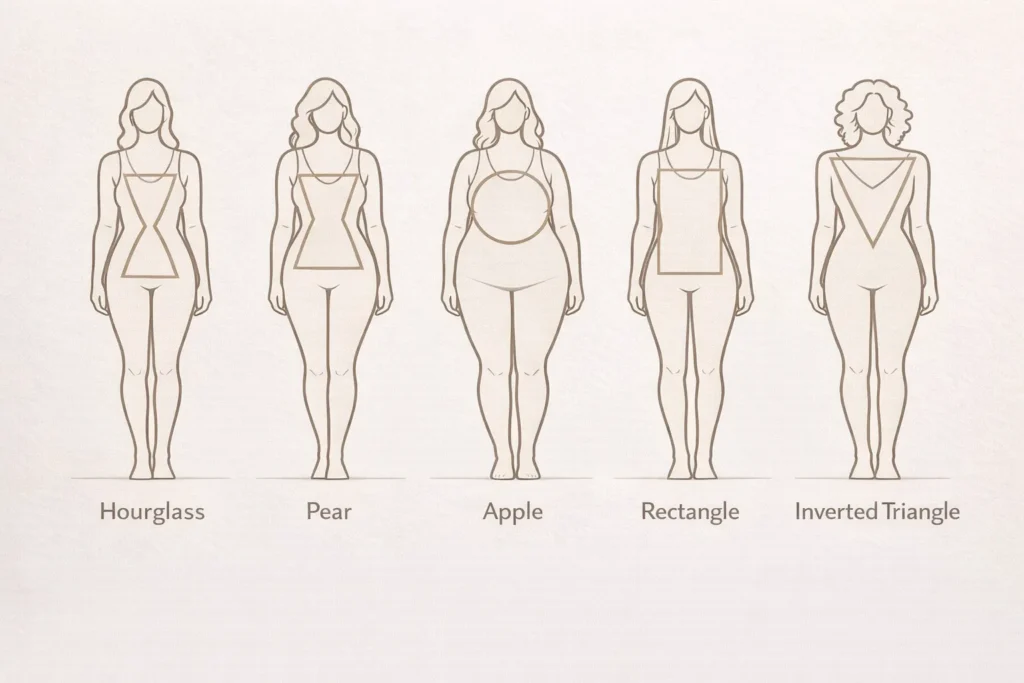
You don’t need a measuring tape.
Stand in front of a mirror and ask:
Where does my body naturally carry visual weight?
From there, most women fall into one of these five body types:
- Hourglass
- Pear
- Apple
- Rectangle
- Inverted Triangle
You don’t need to fit perfectly into one category.
You just need to know which area dominates visually—that’s enough to dress better immediately.
Step 2: How To Dress For Your Body Type With Outfit Examples That Actually Work
Hourglass Body Type
Your shape is already balanced. Your goal is to maintain it.
What works best
- Wrap dresses, belted coats, and fitted blazers
- High-waisted jeans with structured tops
- Soft fabrics that skim your curves
Outfit example
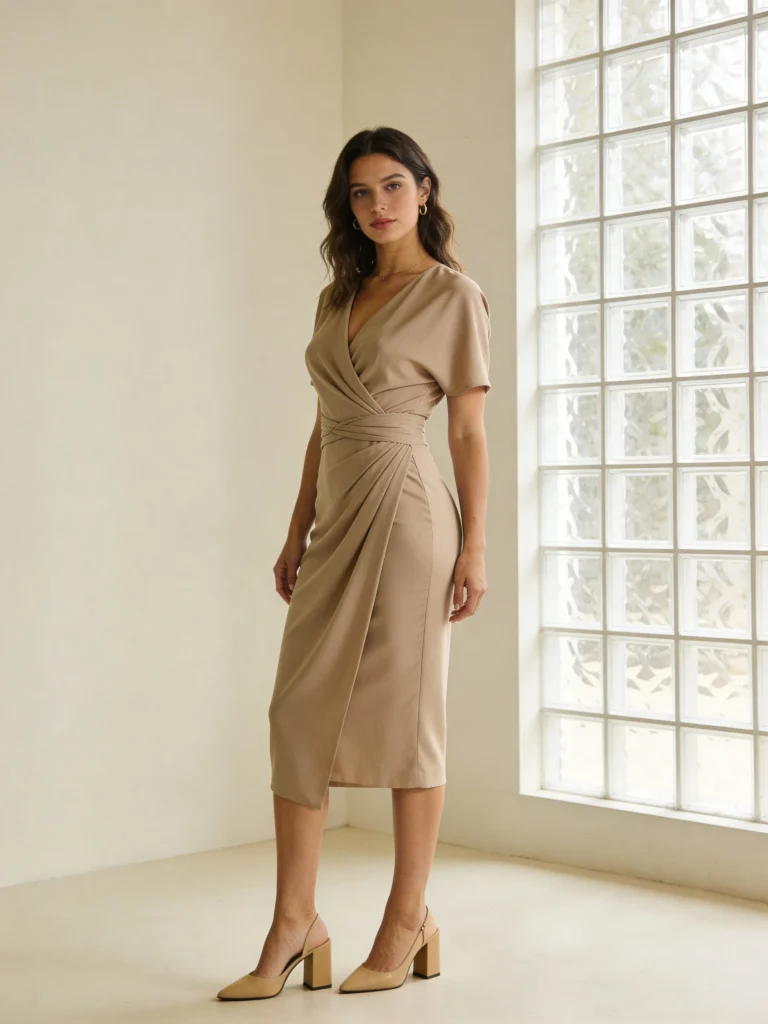
- Wrap midi dress + block heels
- Tailored blazer + fitted tank + straight-leg jeans
- Belted trench coat + ankle boots
Avoid
- Boxy silhouettes
- Oversized layers that hide your waist
Pear-Shaped Body Type
Your hips carry visual weight. Your goal is to draw the eye upward.
What works best
- Statement tops and interesting necklines
- A-line skirts and wide-leg pants
- Cropped jackets that hit above the hips
Outfit example
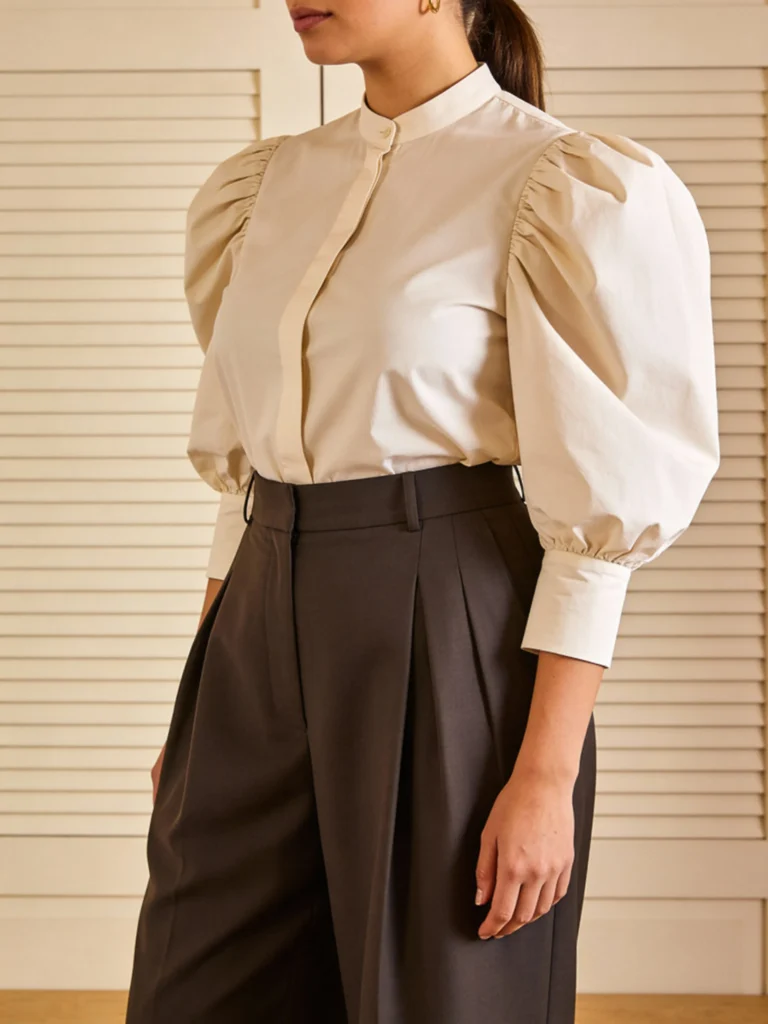
- Puff-sleeve blouse + wide-leg trousers
- Structured blazer + light-colored top + dark jeans
- Off-shoulder top + midi skirt
Avoid
- Tight tops paired with skinny bottoms
- Heavy detailing on the hips
Apple-Shaped Body Type
Your strength is your legs and neckline. Dress to create vertical flow.
What works best
- V-neck and wrap-style tops
- Flowy blouses with structure under the bust
- Longline blazers and open layers
Outfit example
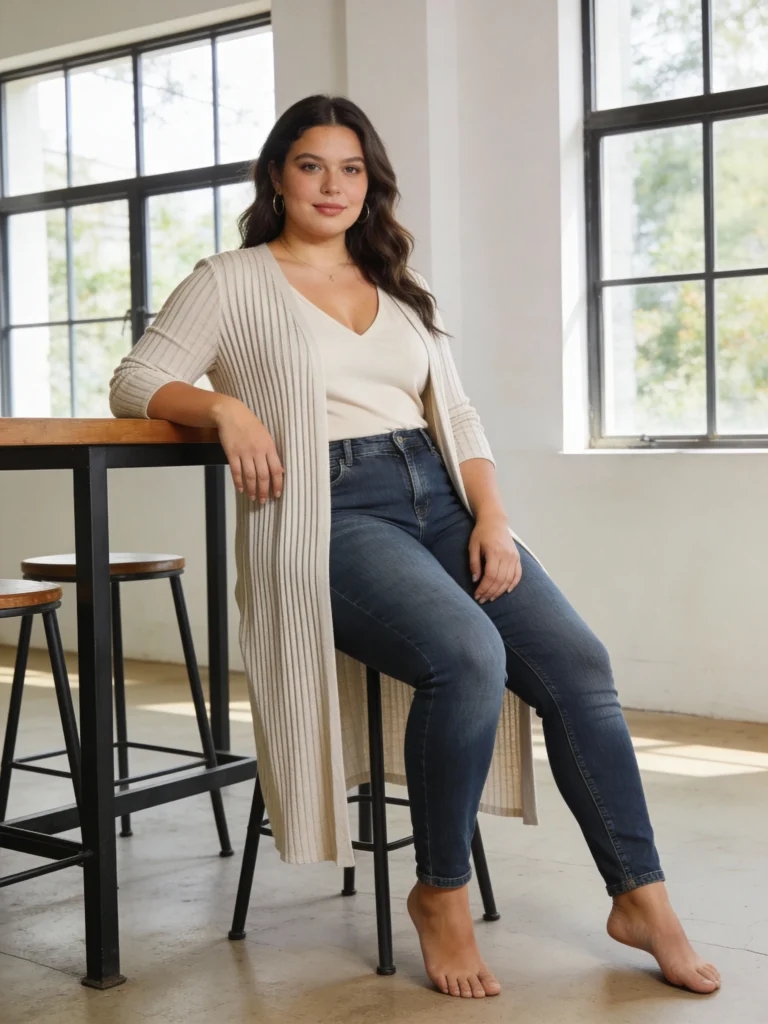
- V-neck top + straight-leg jeans + long cardigan
- Empire-waist dress + ankle boots
- Tailored blazer worn open + simple top
Avoid
- Clingy fabrics around the midsection
- High necklines that add bulk
Rectangle Body Type
Your shape is straight. Your goal is to create curves visually.
What works best
- Belts, peplum tops, and ruching
- Mixing fitted and loose pieces
- Layering for dimension
Outfit example
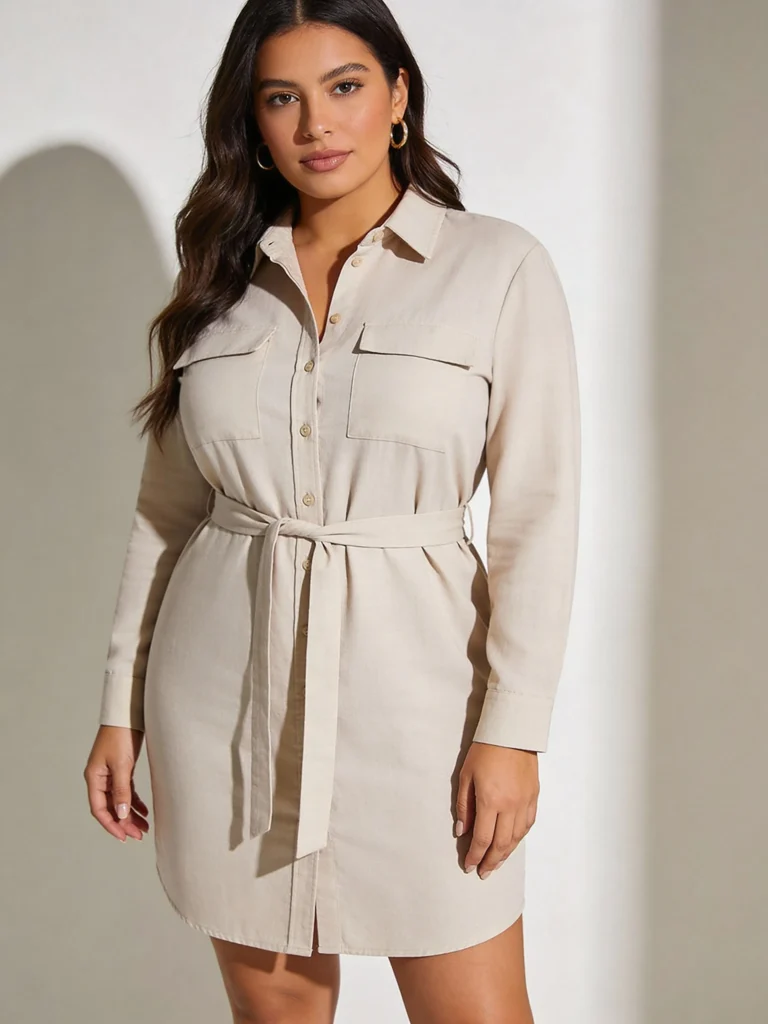
- Belted shirt dress + boots
- Cropped jacket + high-waisted pants
- Ruffled blouse + tailored trousers
Avoid
- One straight silhouette from top to bottom
- Ultra-boxy outfits
Inverted Triangle Body Type
Your shoulders stand out. Your goal is to balance the lower half.
What works best
- Wide-leg pants and flared jeans
- Pleated and A-line skirts
- Simple necklines
Outfit example
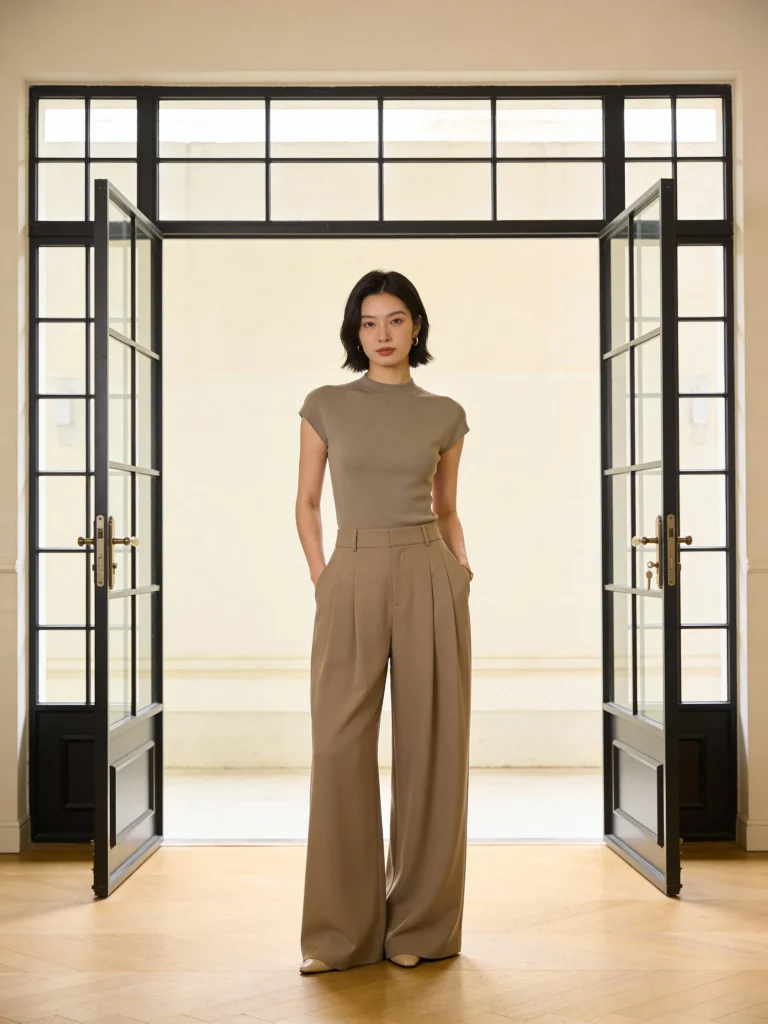
- Simple tee + wide-leg trousers
- Midi skirt + fitted top
- Straight-leg jeans + soft blouse
Avoid
- Boat necks and shoulder pads
- Heavy details near the neckline
Step 3: The Outfit Test That Never Fails
Before you leave the house, ask:
“Where does the eye go first?”
If it lands on your best feature—perfect.
If it lands somewhere you’re unsure about, adjust one thing:
- Change the neckline
- Add a layer
- Swap the fit
One small tweak often changes everything.
Why Dressing for Your Body Type Changes Everything
When you finally understand how to dress for your body type:
- Getting dressed becomes faster
- Shopping becomes intentional
- Confidence becomes effortless
Not because your body changed—but because your approach did.
The most stylish women aren’t lucky.
They’re consistent.
They know what works—and they repeat it.
The Real Secret to Effortless Style
You don’t need more clothes.
You don’t need to chase trends.
You need outfits that respect your shape.
Once you have that, style stops feeling stressful—and starts feeling like confidence you can wear.
Conclusion: Style Was Never About Your Body
Here’s the truth that changes everything:
Your body was never the problem.
The problem was trying to force it into styles that weren’t designed for you.
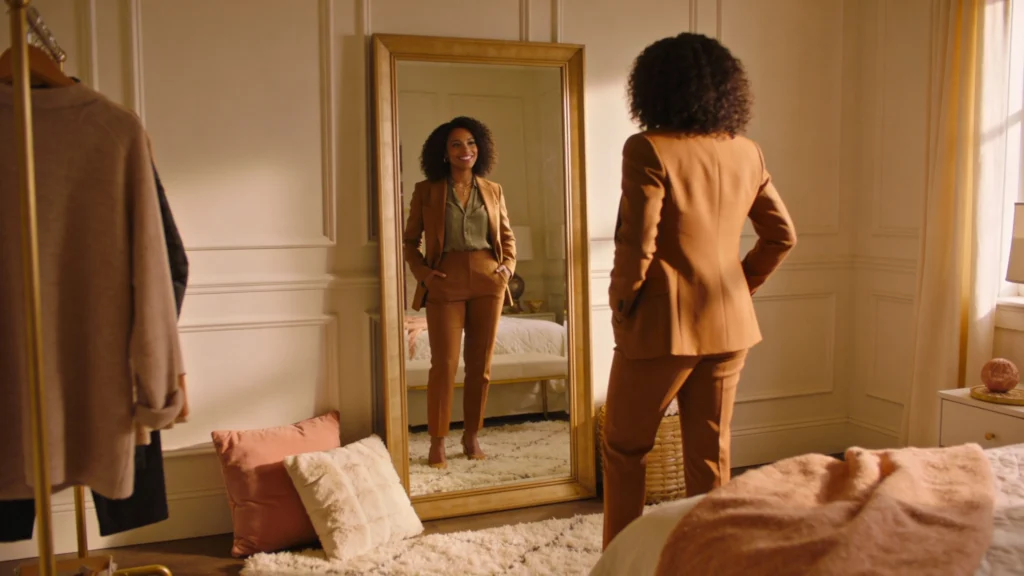
When you understand how to dress for your body type, clothes stop feeling awkward. You stop second-guessing yourself in the mirror. And getting dressed becomes something you enjoy—not something you rush through or avoid.
You don’t need perfection.
You don’t need a closet full of new clothes.
You just need awareness.
Once you know what silhouettes flatter you, what proportions work best, and where to guide the eye, confidence follows naturally. Not because you changed your body—but because you finally learned how to dress with it.
Style isn’t about copying what looks good on someone else.
It’s about discovering what looks good on you—and owning it.
And now, you know exactly how to do that.